
Protein Timing: Does It Really Matter?
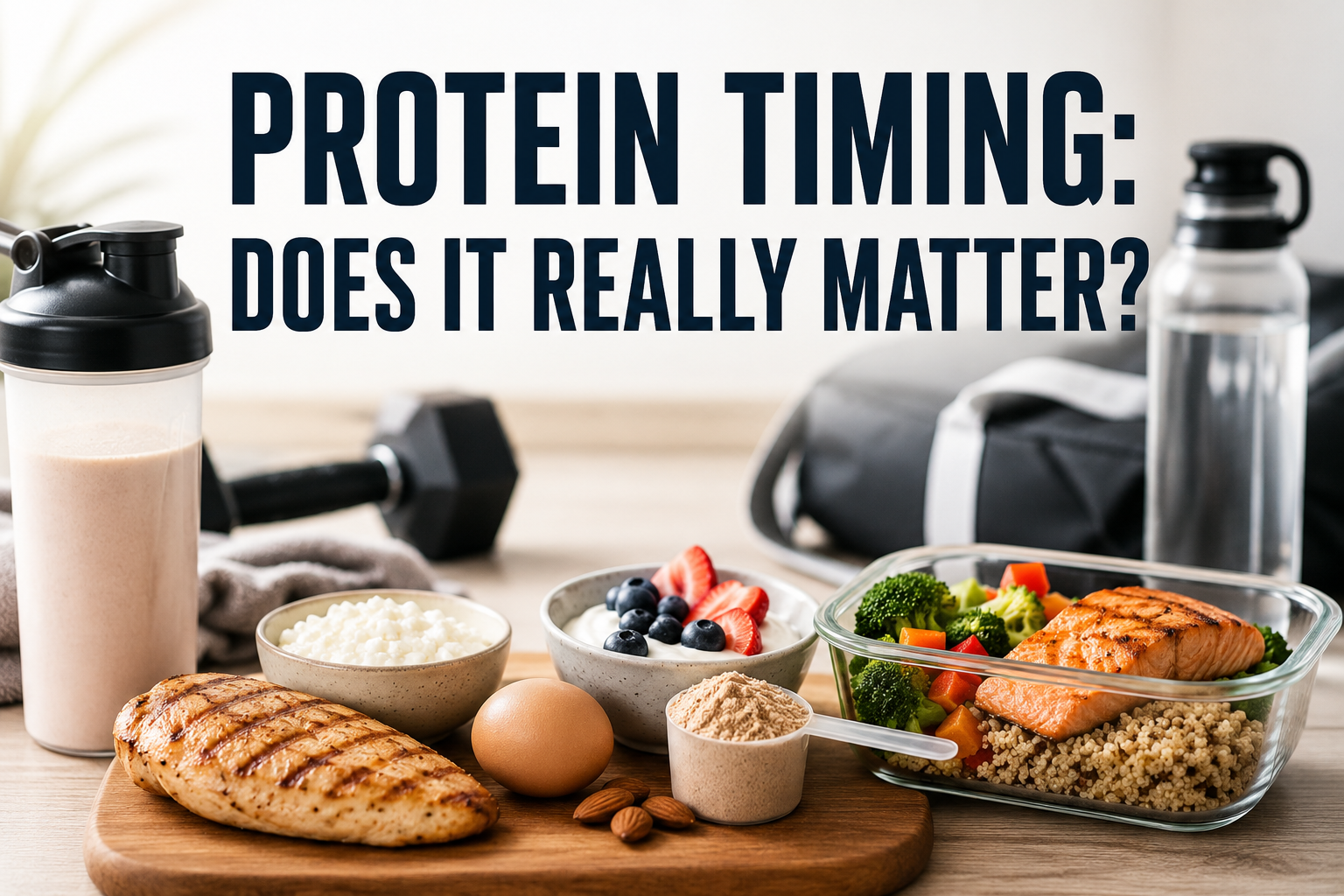
If you're putting in the effort to exercise, it's natural to wonder whether when you eat protein matters as much as how much you eat. The good news? Current research suggests that meeting your daily protein needs is the most important factor. However, strategically timing protein around workouts can help maximize recovery, support muscle maintenance, and enhance training adaptations.
Why Protein Matters for Exercise
Exercise—especially resistance training—creates a stimulus for muscle growth by increasing both muscle protein breakdown and muscle protein synthesis. However, that training stimulus alone isn't enough. Without adequate protein (and calorie) intake, your body doesn't have the building blocks it needs to repair damaged muscle tissue, support recovery, and build new muscle.
While consuming protein around your workout can help maximize muscle protein synthesis, it cannot compensate for eating too little protein throughout the day. Think of your total daily protein intake as the foundation for muscle growth and recovery, while protein timing is the finishing touch that helps you get the most out of your training.
Before Your Workout: Fuel the Work Ahead
Eating protein before exercise can help increase amino acid availability during and after your workout, potentially supporting muscle recovery and reducing muscle breakdown.
A pre-workout meal or snack is especially helpful if:
You are training first thing in the morning
It has been more than 3–4 hours since your last meal
You are completing a longer or higher-intensity workout
Your goal is to build or maintain muscle
Aim for approximately 15–30 grams of protein within 1–3 hours before exercise, paired with carbohydrates for energy.
Pre-Workout Snack Ideas
Greek yogurt with fruit
Apple and string cheese
Whole-grain toast with eggs
Protein smoothie made with milk and fruit
Banana with peanut butter and a glass of milk
After Your Workout: Recovery Starts Here
Following exercise, your muscles are more sensitive to the amino acids needed for repair and recovery. While the old idea of a narrow 30-minute "anabolic window" has largely been debunked, it is still beneficial to consume protein within a few hours after training.
Current evidence suggests aiming for approximately 20–40 grams of high-quality protein after exercise, depending on body size and training demands. Pairing protein with carbohydrates can further support recovery by replenishing glycogen stores and preparing your body for future training sessions.
Post-Workout Meal Ideas
Greek yogurt with berries and granola
Eggs with whole-grain toast and fruit
Chicken, rice, and vegetables
Tofu stir-fry with rice
Protein smoothie with milk, fruit, and protein powder
Cottage cheese with fruit and nuts
Do You Need to Time It Perfectly?
For most people, the difference between eating protein 30 minutes versus 2 hours after a workout is minimal if total daily protein intake is adequate. Research now suggests that protein distribution throughout the day may be just as important as post-workout nutrition. Rather than consuming most of your protein at dinner, aim to include protein at each meal and snack.
A practical goal is 20–40 grams of protein per meal, spread evenly across the day.
Challenge: Evaluate Your Protein Timing
For the next week, pay attention to when you're eating protein relative to your workouts. Are you going several hours before or after training without a protein-rich meal or snack? Try adding 20–30 grams of protein before or after your workout and notice how it impacts your energy, recovery, hunger, and performance.
